
Help Centre / Training and recovery articles
5 high protein lunches for tradies with no microwave needed
A decent lunch is harder to organise when the worksite changes, the lunchroom is a folding chair and there’s no microwave. Add training after work and a packet of chips is unlikely to cover what you had in mind.
The answer can be fairly ordinary food: a chicken wrap, a proper pasta salad or a lunchbox you can eat cold. The useful bit is knowing what to put in it, how much protein to aim for and how to keep it safe until lunch.
Build a complete lunch
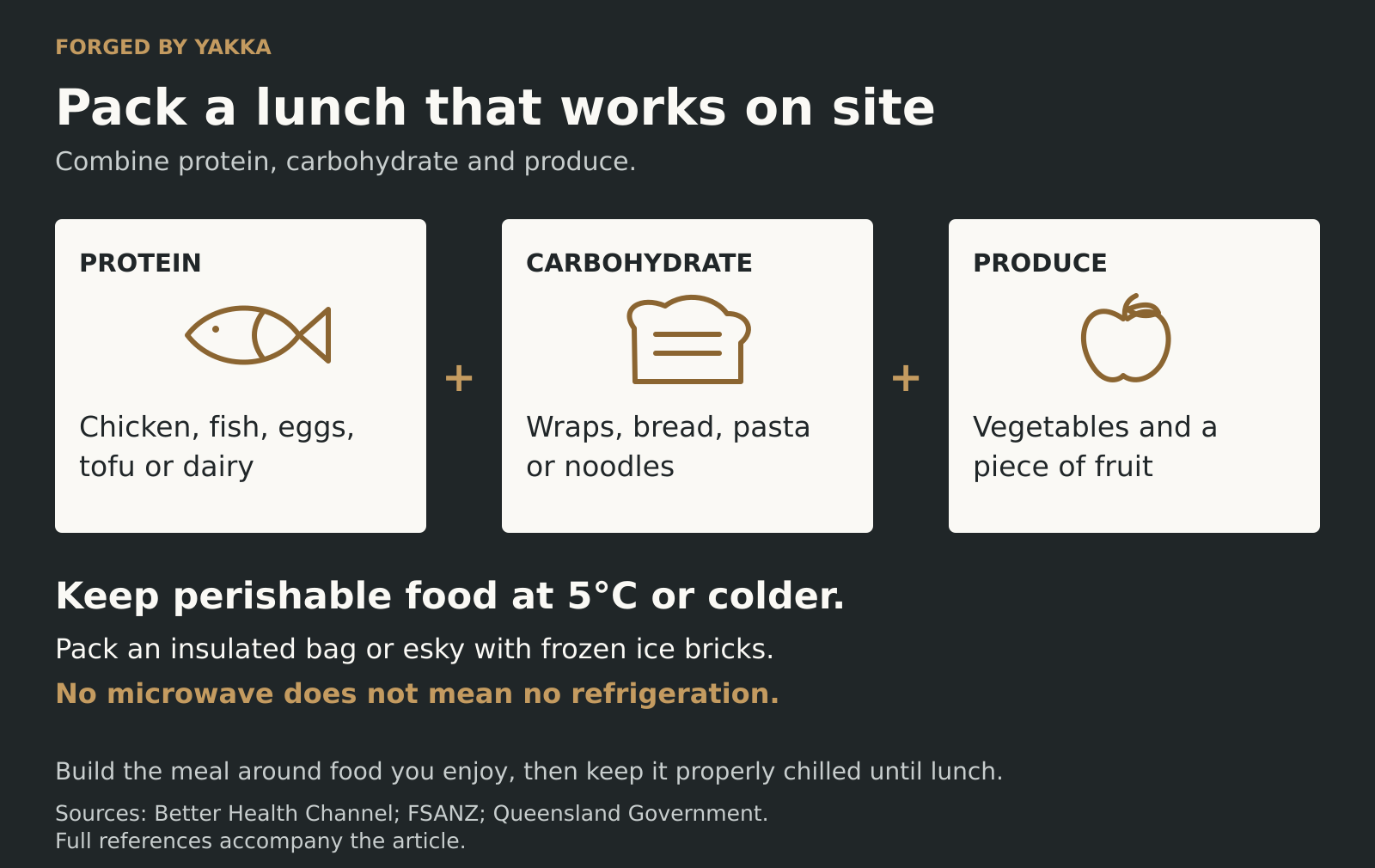
Start with a protein food, add bread, pasta or another carbohydrate source, then include vegetables or fruit.
Carbohydrate helps fuel exercise, so there’s no need to strip out the wrap or pasta just because you want more protein. The Victorian Government’s Better Health Channel recommends a varied training diet with enough energy, carbohydrate and protein, rather than focusing on one nutrient. Better Health Channel
Pack enough for your day. A small salad might suit one person and leave someone else looking for another meal an hour later. Your body size, workload, training and appetite all matter.
How much protein should lunch contain?
For athletes, the Australian Institute of Sport suggests spreading protein across the day, with around 0.3–0.4 grams per kilogram of body weight at eating occasions. For an 80 kg person, that works out to roughly 24–32 grams. Australian Institute of Sport
That’s a useful reference for someone training regularly, not a compulsory target for every tradie. Your total diet and individual needs still count.
You don’t need to calculate every mouthful. Check food labels a few times to learn what your usual portions provide. The quantities below are practical examples. Adjust the meal to your appetite and needs; protein content varies between products.
Five lunches that work cold
1 Chicken wraps with hummus and salad
Try 100 g of cooked chicken across one or two wholemeal wraps, with hummus, grated carrot and baby spinach. Put wet ingredients, such as sliced tomato or dressing, in a separate container if soggy wraps put you off.
Add a piece of fruit and pack an extra wrap if one won’t cover lunch.
2 Tuna and bean pasta salad
Combine 100 g of drained tuna and half a cup of rinsed canned beans with cooked pasta, cucumber and capsicum. Check the tin’s drained weight rather than its total weight. Dress with lemon juice and olive oil.
The beans add variety without another cooking job. Make the pasta salad the night before and refrigerate it promptly. If you open the tuna at lunch, stir it through then and eat it straight away.
3 Eggs and cottage cheese with crackers
Pack two boiled eggs and 100 g of cottage cheese, plus wholegrain crackers and chopped vegetables. Keep the crackers separate so they stay crisp.
This suits anyone who would rather pick from a lunchbox than eat a big mixed meal. Use the cottage-cheese label to check the protein in the portion you pack.
4 Tofu and edamame noodle salad
Toss cooked, cooled noodles with 200 g of firm tofu and half a cup of cooked shelled edamame, shredded cabbage and carrot. Add a dressing you like in a separate container.
Follow the tofu and edamame packets’ preparation instructions. Firm tofu varies in protein content, so check the brand you buy.
5 Leftover roast beef or roast pork
Set aside 100 g of cooked lean roast beef or pork at dinner. The next morning, put it in wholegrain rolls with salad and mustard or another preferred spread.
Pack the meat separately if you want to assemble the rolls at lunch. Leftover roast vegetables can go alongside. This is a useful option when you don’t want to cook an entirely separate meal.
No microwave does not mean no refrigeration
Chicken, cooked meat, eggs, dairy, tofu and cooked pasta need proper cold storage. Keep perishable food at 5°C or colder. Cool cooked food promptly, using shallow containers in the fridge, rather than leaving it on the bench. FSANZ: food safety basics
Take lunch in an insulated bag or esky with frozen ice bricks, and keep it out of direct sunlight. Put it in a fridge when one is available. An insulated bag without enough cooling isn’t a substitute for refrigeration. Queensland Government: lunchbox safety
If perishable food has been between 5°C and 60°C, add up all that time, including preparation and travel:
- Under two hours: eat it or refrigerate it.
- Two to four hours: eat it now; don’t refrigerate it for later.
- Four hours or more: throw it away. FSANZ: two-hour/four-hour rule
Keep a backup lunch
If you cannot keep food cold, take unopened shelf-stable food instead: tinned fish, wholegrain crackers and whole fruit, for example. Follow storage directions, open the fish when you’re ready to eat and don’t save unrefrigerated leftovers. Queensland Government
Start with two lunches you actually enjoy. Buy the ingredients, freeze the ice bricks and pack while you’re already sorting dinner. A repeatable lunch beats an ambitious meal-prep plan that never leaves the kitchen.
General information for healthy adults who exercise. If you have kidney disease or another condition affecting your diet, discuss protein targets with your doctor or an Accredited Practising Dietitian.
References
1. Victorian Government, Better Health Channel. Sporting performance and food.
2. Australian Institute of Sport / Australian Sports Commission. Isolated protein supplement: What is it?.
3. Food Standards Australia New Zealand. Food safety basics. Updated 8 July 2025.
4. Queensland Government. Lunchbox safety. Updated 9 June 2021.
5. Food Standards Australia New Zealand. 2-hour / 4-hour rule.
Sources checked 27 October 2026.